ONLINE REGISTRATION
Close


ONLINE REGISTRATION
Close
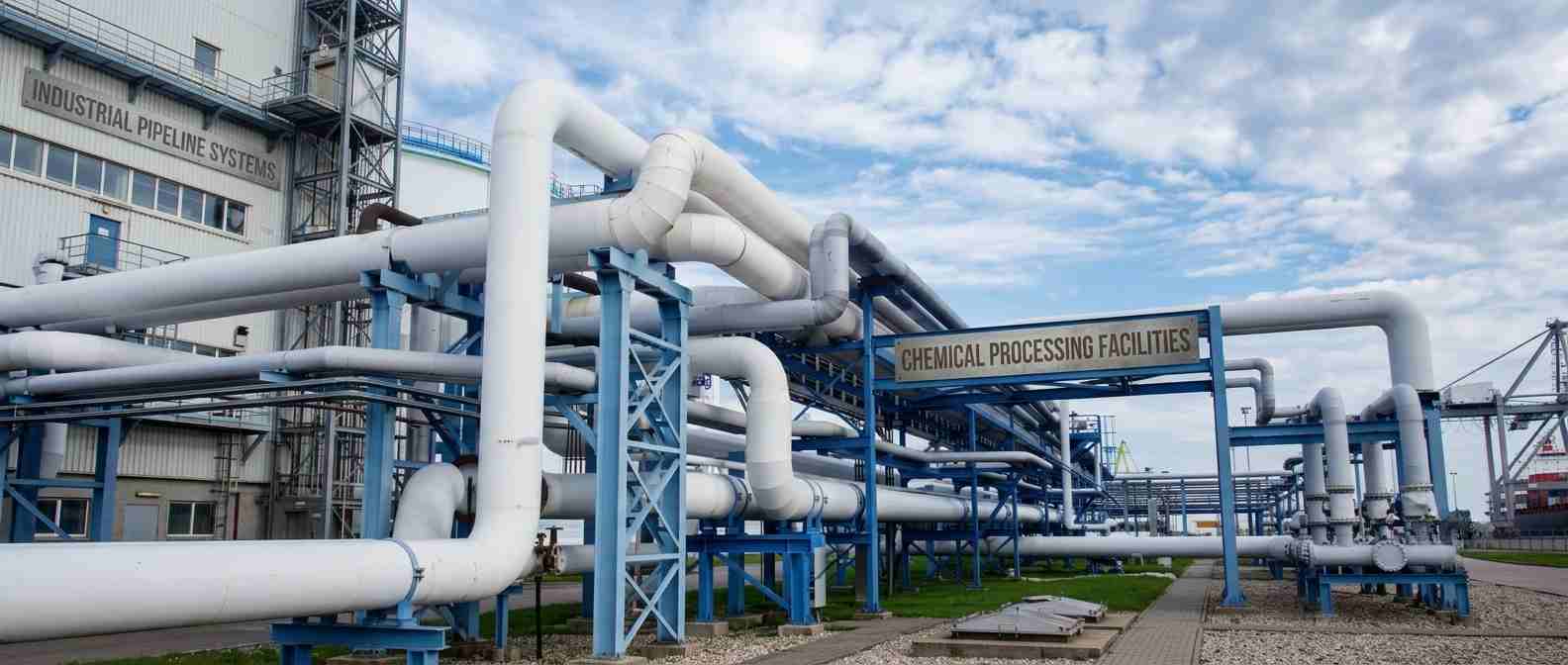
Piping systems are essential in chemical processing facilities for the safe and efficient transportation of fluids. These systems are frequently used with corrosive chemicals, high temperatures, high pressures and challenging operating environments. Thus, all pipe connections should have reliable performance.
One of the most crucial aspects of pipe process piping design is pipe branching. A branch connection is a pipe that connects to a main header. This connection may lead the process of fluid to the equipment, vessels, pumps, storage systems, or other production areas.
But not all the branching methods are appropriate for all chemical process applications. It depends on the pipe material, pressure, temperature, flow rate, branch size and code.
Pipe branching creates a connection between a main pipe and one or more secondary lines. The main pipe carries the primary process flow. The branch redirects part of that flow toward another destination.
Chemical processing facilities may use branch connections for:
Because every branch creates a change in the piping structure, engineers must consider strength and flow carefully. Proper design helps maintain system integrity under operating conditions.
A branch connection creates an opening in the main pipe. This opening can affect the strength of the header. Therefore, the connection must receive proper engineering attention.
Several factors can influence branch design:
ASME B31.3 provides requirements for process piping applications. Proper engineering and fabrication help ensure that branch connections meet applicable project requirements.
T-drill collaring offers an efficient approach to industrial pipe branching. Instead of attaching a separate tee fitting, the process forms a branch outlet directly from the wall of the main pipe.
Specialized equipment creates an opening and pulls the surrounding material outward. This forms a collar around the branch opening. The branch pipe can then connect to the formed outlet.
This approach can provide several advantages:
UC Design & Distribution specializes in T-drilled branch connections and offers T-drilling capabilities for process piping applications.
Traditional branching methods may require additional fittings and multiple welded connections. Each additional component can increase fabrication time and inspection requirements.
T-drill collaring can reduce the number of components needed for certain applications. The branch forms directly from the parent pipe, creating an integrated outlet.
This can help chemical processing projects achieve:
However, engineers should always evaluate the specific application before selecting a branching method. Pressure, temperature, pipe material, and project standards all matter.
T-drill collaring is not the only option. Traditional welded branch connections remain valuable for many industrial applications.
A welded connection can provide flexibility for custom piping layouts. It may also suit demanding applications where specific fittings or reinforcement designs are required.
The appropriate approach depends on the project.
For example, a facility may compare:
Each method has different fabrication, cost, installation, and performance considerations.
Chemical processing environments can expose piping to aggressive chemicals and extreme conditions. Therefore, material selection plays a major role in branch connection performance.
Stainless steel remains a common choice for many process piping applications. UC Design & Distribution works with stainless steel grades including 304, 316, and 316L, along with carbon steel and high-alloy materials.
The correct material depends on the chemical environment and operating requirements. Engineers should consider corrosion resistance, temperature, pressure, and compatibility before fabrication begins.

A high-quality branch connection requires more than accurate forming. Welding also plays an important role.
Orbital welding can provide consistent, repeatable welds for suitable applications. UC Design & Distribution lists orbital welding among its pipe fabrication capabilities. The company also works with certified welding procedures and ASME Section IX certified welders.
Quality control can include:
These processes help verify fabrication quality and provide useful documentation for project records.
Chemical processing projects often require detailed documentation. Owners and contractors may need to verify materials, welding procedures, inspections, and testing.
Full traceability helps connect fabricated components with their material and production records.
UC Design & Distribution provides documentation such as material records, weld maps, welding procedures, and testing documentation.
This documentation can make project reviews and future maintenance easier.
Chemical processing facilities should not select a branch connection based only on initial cost. The entire application deserves consideration.
Before selecting a fabrication method, evaluate:
A qualified fabrication partner can help determine which solution best matches these requirements.
Reliable pipe branching supports the safety, efficiency, and performance of chemical processing systems. T-drill collaring can provide clean, repeatable branch connections while reducing fittings and welding for suitable applications. Traditional welded connections also remain valuable for many demanding projects.
The key is choosing the right method for the specific piping system. Precision fabrication, qualified welding, proper inspection, and complete documentation can all contribute to dependable results.
If your chemical processing facility needs precision pipe branching, T-drill connections, or custom process piping fabrication, UC Design & Distribution is ready to help. With expertise in T-drilled branch connections, process piping, orbital welding, traceability, and code-compliant fabrication, UC Design & Distribution can develop solutions tailored to your project’s requirements. Contact UC Design & Distribution today to discuss your next pipe branching or process piping project.
Pipe branching connects secondary process lines to main headers for efficient fluid distribution throughout chemical processing facilities.
T-drill collaring creates integrated branch outlets, reducing fittings, welding requirements, fabrication time, and potential leak points.
Stainless steel, carbon steel, and high-alloy materials can suit different chemical processing applications and operating conditions.
ASME B31.3 establishes requirements for process piping design, fabrication, examination, testing, and safe operation.
Evaluate pressure, temperature, materials, flow requirements, applicable codes, installation conditions, inspection, and long-term maintenance needs.
 Optimized by Seraphinite Accelerator