ONLINE REGISTRATION
Close


ONLINE REGISTRATION
Close
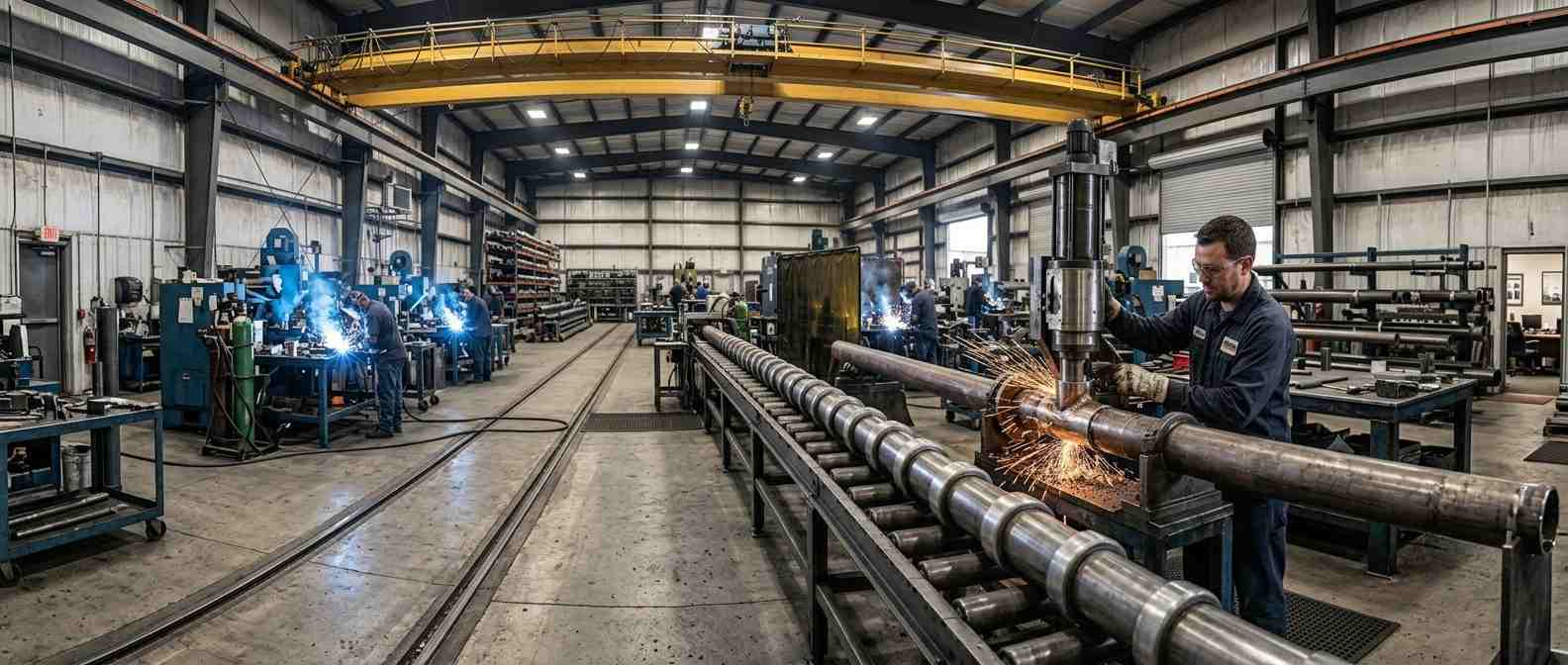
Pipe collaring replaces three welded joints with a single extruded branch. You pull a collar directly out of the header pipe and attach the adjoining tube straight to that new lip. This cold forming technique creates robust branch connections without slicing your main line in half. Shop floors save massive amounts of fitting preparation and inspection time.
This fabrication method uses outward cold extrusion to form a tee connection straight from a continuous run of metal tubing.
Standard methods force you to cut a main line. Then you bevel both ends and weld in a factory forged tee fitting. That approach requires three distinct welds and a lot of heavy material handling. The collar method simply pulls metal outward from the tube side to create an integrated branch outlet. You bypass separate fittings entirely.
There’ll only be one weld on the finished assembly.
The workflow happens right on the shop floor with specialized equipment. A pilot hole gets drilled into the side of the header tube. An extraction tool drops into that void and pulls outward to stretch the metal into a collar. A facing tool then trims the top edge flat for welding.
Here is the thing about this sequence:
Think of the extraction step like stretching dough. If you pull too fast, it tears. If you pull with even, controlled pressure, you get a perfect shape. Pipe collaring machinery handles the speed and pressure.
But successful mechanical collaring requires a clean starting material and strict tool calibration. Operators must secure the tube flawlessly before starting the sequence.
Traditional tees require too much preparation time for modern competitive schedules. It is often seen that contractors lose entire shifts just measuring pipe edges. They cut out sections and tack separate fittings together before the final welding even starts. Every manual cut introduces a new variable and a potential failure point.
There are shops where welders spend hours grinding down root passes on standard forged tees. They constantly battle alignment issues because the forged fittings rarely match the exact internal diameter of the run tube. You end up with a step inside the pipe that traps fluid. Pipe collaring eliminates that step completely. The extruded lip perfectly matches the wall thickness of your adjoining tube.
Let’s look at a quick shop floor comparison:
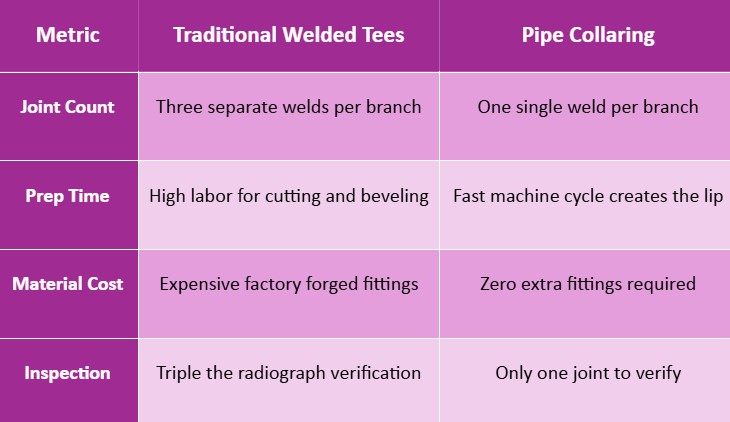
Pipe collaring saves you money on materials.
And honestly buying back massive amounts of labor hours matters more. A shop processing a high volume of custom spools notices the efficiency gains on the very first day.
You can use this cold forming technique on almost any malleable metal. Stainless steel performs exceptionally well because it stretches and hardens during the extrusion process to create a robust neck.
Copper plumbing systems in massive commercial builds see huge benefits because the material is soft and pliable. You can pull dozens of branch connections in a single morning. Carbon steel demands robust machinery. The harder material resists the pulling force, but a properly calibrated machine will form a perfect collar every time.
But here is where people mess it up.
Some shops try to execute pipe collaring on brittle alloys without checking the material yield strength first. You will crack the header pipe if the metal lacks sufficient elongation properties for the draw. I once watched an apprentice ruin a twenty foot stick of exotic alloy because he ignored the yield strength chart. Understanding metal limits is the first step in successful cold forming.
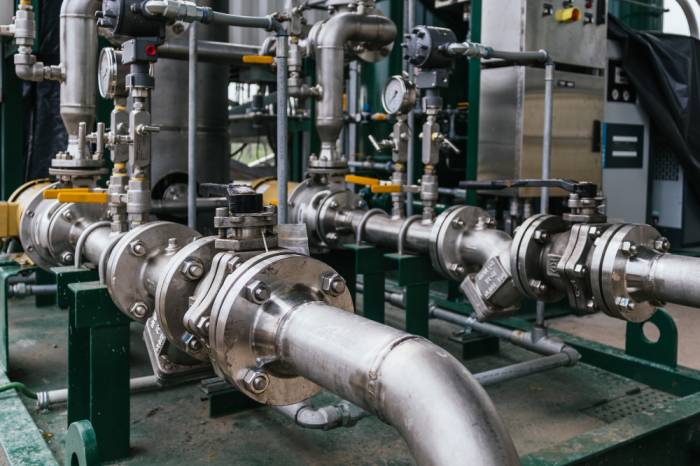
Eliminating two thirds of your welding labor changes the entire project math.
Think about a standard manifold with ten branch connections. A conventional approach means thirty individual welds to prep and inspect. Using the T drill process cuts that down to just ten welds. You drop the risk of leaks and slash consumable costs. There is less grinding and less filler metal burned.
A single orbital welding pass on an extruded lip looks cleaner. It provides smoother internal fluid flow than bulky standard fittings. You get lower pressure drops across the manifold. The smooth interior transition prevents the turbulence that typically eats away at standard joints over time.
Your fabrication shop should not lose margin on unnecessary cutting and welding.
Old habits keep contractors locked into buying expensive fittings and spending excessive hours on joint preparation. Modern production demands faster turnaround times and superior joint integrity. You need a partner who understands how to maximize efficiency without cutting corners on the final product quality. We deliver precision branch connections that keep your projects running ahead of schedule and under budget.
Reach out to UC Design and Fabrication to see how our custom process piping assemblies can improve your next installation. Stop paying for wasted hours and let our experts handle your pipe collaring needs today.
The process maintains full structural integrity because the metal is cold formed rather than cut away. The resulting collar remains incredibly strong and meets standard process piping codes.
Yes, you can utilize this technique for high pressure applications. Engineers specify these cold drawn collars for critical fluid systems because a single joint presents fewer potential leak paths.
You skip measuring, cutting, and beveling the main tube entirely. This eliminates two separate welds, cutting your fabrication time by more than sixty percent on every single branch connection.
Yes, you still perform one weld. The drawn lip provides a perfect square landing zone for the adjoining tube. This makes final attachment extremely fast and highly repeatable for welders.
Thin wall tubing works incredibly well for this application. The drawing sequence naturally hardens the material around the new opening, adding localized strength exactly where the joint needs it.
 Optimized by Seraphinite Accelerator