ONLINE REGISTRATION
Close

ONLINE REGISTRATION
Close
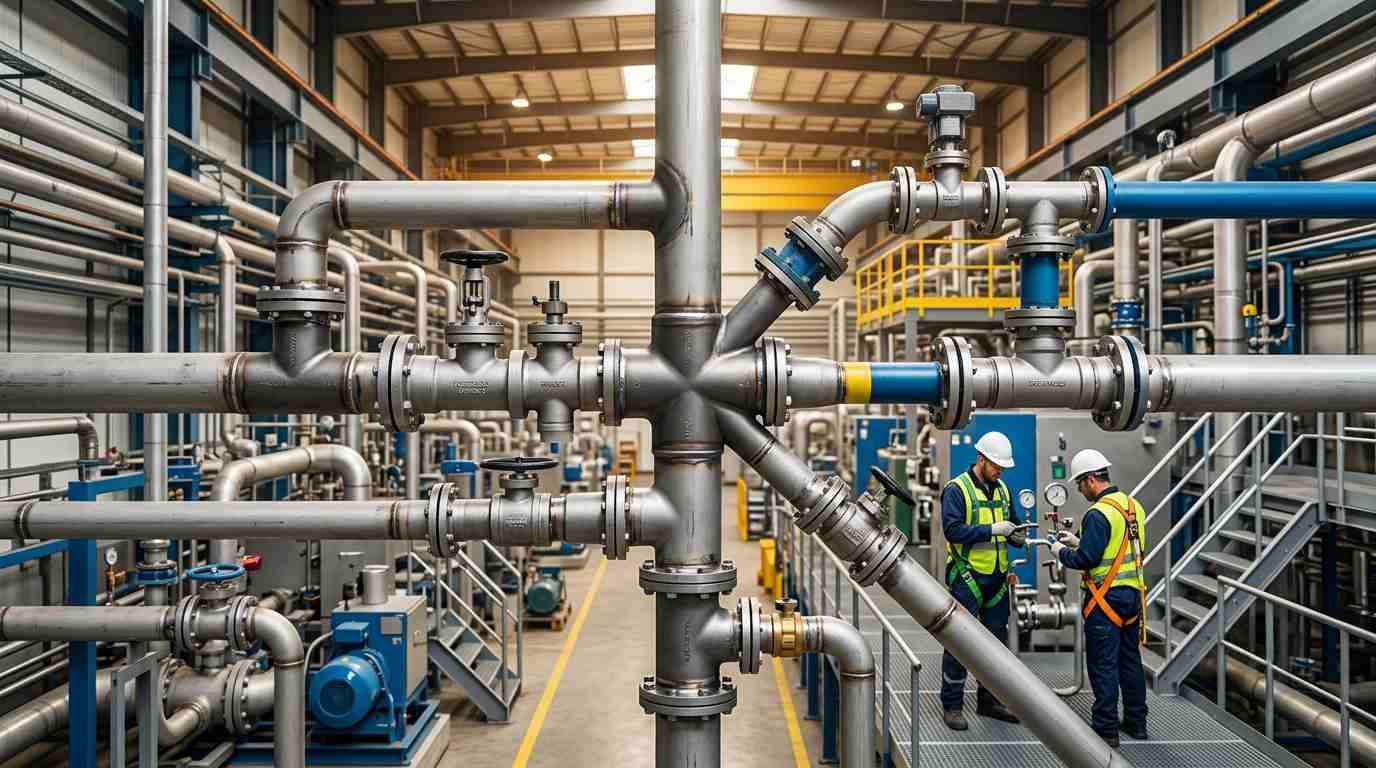
The selection of an appropriate pipe branching method is crucial for the development of a sound industrial pipe system. Each facility will have unique operating conditions, space constraints, pressure requirements and maintenance requirements. An appropriate branch connection ensures efficient flow of fluid and contributes to the safety and durability of the entire network.
The choice of a decision is more than just choosing a fitting that matches pipe diameter. The engineer has to take into account the compatibility of the materials, the operating temperature, the flow rate and the applicable industry standards. This knowledge will help you to make a better choice of the solution that meets the technical requirements and long-term objectives of the facility.
Review the operation of the piping system before choosing a branching method. A branch connection should not impose any unnecessary restrictions or jeopardize the integrity of the system.
The first step is to determine your installation’s primary needs. Take the following into account:
These details are useful to determine which connection methods are appropriate. They also offer a good starting point for engineering calculations and design reviews.
The various methods of branching are used for different purposes. The selection depends on the pipe layout, the service conditions, fabrication requirements, and project specifications.
Tee fittings are often employed when a simple branch connection is required in a pipeline. They usually have three openings so that flow can go through the main line and into or out of a secondary line.
Equal tees have the same main and branch diameters, and reducing tees have a smaller branch. When the piping layout allows, standard tees can help to simplify fabrication and installation.
Consider tee fittings when:
Welded branch connections are formed by connecting a smaller pipe or branch to the main pipe. These connections may be reinforced and fitted with specially designed branch fittings as required by the design.
This can be used for certain layouts and challenging industrial uses. However, the design should consider stresses around the branch opening, material properties, welding procedures and inspection requirements.
When a special arrangement is specified or when a standard fitting is not appropriate for the application, welded connections may be considered.
Reinforced branches give extra support if necessary for the design. Reinforcement can be a proper fitting, reinforcing pad, or an engineered configuration.
Reinforcement requirements are influenced by the pressure, pipe size, pipe material strength and opening geometry. It should not be selected simply because a system operates at high pressure. The solution must be determined by engineering calculations and by the piping code that is applicable.
A branch connection will impact both flow and the strength of the piping system. If geometry is not chosen properly, it can lead to pressure losses, turbulence or poor flow distribution.
Check the branch flow rate and see if the connection geometry can meet the desired flow rate. For critical process fluids, additional hydraulic analysis might be required.
Structural integrity is another important point to consider. Opening up a main pipe alters the local strength and stress distribution. Relevant loading conditions such as pressure, thermal expansion, vibration and external loads need to be evaluated by the engineers.
Before approving a design, verify that:
These inspections can minimize the risk of leaks, early failures, and expensive repairs.
A method that appears to be suitable on paper could be hard to fabricate or install. It is important to look at practical considerations early to avoid delays and waste.
Review the manufacturing, transportation, alignment, welding and inspection of the selected connection. Access to welding may be restricted in tight spaces, and complex configurations can necessitate extra engineering and quality-control procedures.
The decision is also made based on the maintenance requirements. If a facility is going to be in continuous use, it can be designed to facilitate inspection and reduce disruption in the event of future repairs.
When comparing alternatives, assess these practical considerations:
Cheap upfront doesn’t always mean a great return on investment. The best connection is one that is designed to provide a balance of upfront costs, reliability, accessibility and expected performance.

Industrial piping projects must conform to the codes, standards and specifications applicable to the project. The requirements depend on the purpose, location, materials and operating conditions of the system.
Before completing a branch design, engineers should determine which piping code is governing. They also need to verify material specifications, welding qualification requirements, inspection procedures, and documentation requirements.
Consistency is important throughout fabrication, and qualified personnel are a key factor. Good records are important to show that material, welding work, inspections and testing have been conducted according to approved requirements.
Future maintenance, troubleshooting and modifications are also supported by complete documentation. It provides the facility operators with a better understanding of the piping system design and verification.
The choice of pipe branching method must take into account a balance of engineering performance, fabrication requirements, safety, and cost. Each of the tee fittings, welded connections, and reinforced branches has its own benefits for specific uses.
The best choice is the one that is appropriate for the facility’s operating needs and meets the codes and project specifications. Careful design review, engaging the services of qualified professionals and planning for inspection can help avoid unnecessary issues.
When your facility needs dependable piping design, then skilled fabrication, and thorough documentation, partner with UC Design & Distribution. Our team brings together expert designers, AWS- and ASME-qualified welders, and seasoned fabricators to turn complex piping requirements into precise, fully documented solutions. Contact us to discuss your project and identify an approach that supports your facility’s performance and reliability.
Tee fittings are widely used because they provide straightforward branch connections in many industrial and commercial piping systems.
Engineers consider welded branches when layouts, operating conditions, or project specifications require a suitable engineered alternative to standard fittings.
No. Reinforcement depends on applicable codes, pressure conditions, pipe dimensions, material properties, and engineering calculations.
Branch geometry influences flow distribution, pressure losses, stress concentration, and the overall reliability of an industrial piping network.
Documentation records materials, fabrication, welding, inspections, and testing, helping support compliance, maintenance, troubleshooting, and future modifications.