ONLINE REGISTRATION
Close

ONLINE REGISTRATION
Close
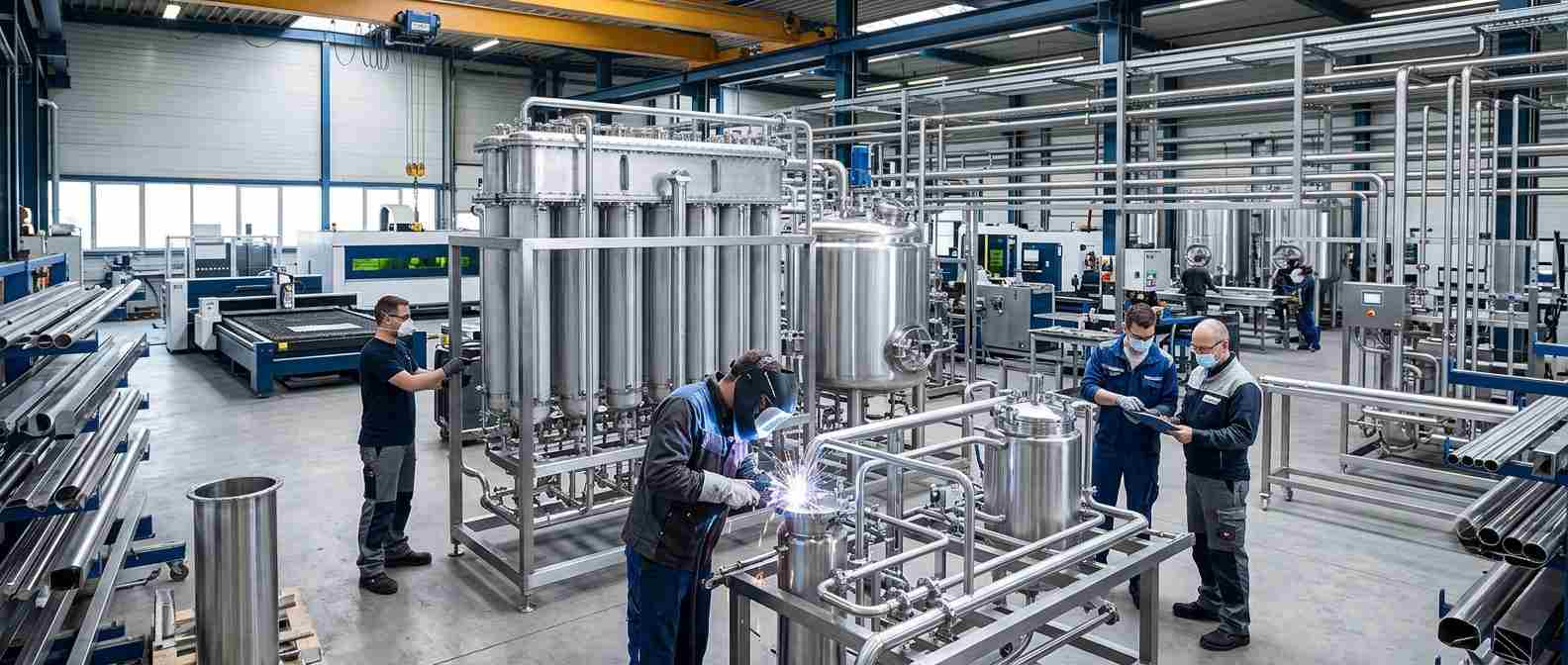
Industrial plants require machinery that can withstand intense workloads, temperature fluctuations and constant production. The standard components may not, in all cases, be the most suitable for a particular operation. Custom stainless steel fabrication is a practical approach to the creation of equipment, building, and piping pieces that are tailored to the needs of individual facilities.
This process is related to the cutting, forming, welding and assembling of stainless steel to make useful products. When executed properly, it can enhance business productivity, quality of products and services and minimize wasteful downtime. Customized metalwork can play a crucial role in ensuring reliable operations and fulfilling industry-specific needs, ranging from manufacturing plants to processing facilities.
Custom stainless steel components help facilities meet specific equipment and production requirements. They improve space utilization, support smoother workflows, and help maintain reliable industrial operations.
Each industrial site is unique in terms of the manufacturing goals, equipment needs, and layout. Standard components will need modifications to accommodate existing space or systems. Custom fabrication is the solution that can overcome these challenges because it creates parts based on the user’s given measurements and engineering drawings.
Examples of fabricated products might be storage tanks, frames, machine guards, platforms, enclosures, and piping assemblies. They can be sized and configured to fit in with the current infrastructure of the facility.
This can have several practical benefits:
If equipment is suitable for its environment, workers will be able to finish work faster. Good planning also minimises costly changes once the product has been made.
A variety of stainless steel grades have strong corrosion resistance, durability and cleanability, making them widely used in various industrial environments. Their properties are ideal for use where moisture, chemicals, temperature and washing are a concern. But not all stainless steel grades are created equal. The material selection needs to be based on the operating environment and exposure conditions, along with mechanical properties.
Custom fabrication gives engineers the flexibility of selecting the right materials and thicknesses for the application. They can even consider the load needs, connection information, and ecological circumstances in the design phase. Facilities can minimize potential replacement and maintenance surprises with durable components. But fabrication quality, welding techniques, surface finishing and proper maintenance are also important in determining performance.
Choosing appropriate materials from the outset aids businesses in constructing equipment that promotes steady production in the long run.
The efficiency of industry is dependent upon the ease of operation of equipment in the day-to-day operations. Ineffective design will hinder access, make materials difficult to move and add extra working steps for staff.
One way to overcome these problems is to customize the stainless steel fabrication according to the production process. For instance, a particular worktable, material handling frame or enclosure for processing may be needed to facilitate the flow of products from one workstation to the next at a manufacturing plant.
A properly designed layout can assist businesses:
These enhancements can help make regular duties simpler and minimize unnecessary disruptions. The most important lessons are frequently learned by engaging operators, maintenance staff, and engineers in the design process prior to finalization.
Their input makes sure that fabricated parts address true workplace issues, and not create new ones.
Products for industry need to be brought to specific dimensions and specifications. The small tolerances can result in difficulties aligning, fitting or joining components into a larger assembly, installation delays, and inaccuracies.
Custom Fabrication is a process that creates components, utilizing engineering drawings, dimensional inspections, appropriate cutting techniques and controlled welding processes, according to project specifications.
Quality control might involve:
The specific inspection procedure varies according to the component, its application and the standards.
Predictable installation and reduced rework due to consistent fabrication quality. It also enhances the confidence of the facility managers to ensure that components have been produced according to the agreed specifications.
There may be a greater upfront cost for custom S/S parts than buying a standard part. But the sum of the values should be looked at over the lifetime of the equipment.
A well-designed component can decrease maintenance needs, simplify access, and decrease the need for frequent changes. Choosing durable materials for the appropriate operating conditions can also reduce the need for replacement.
When assessing a fabrication project, businesses need to take into account many of the costs involved, such as:
A total cost analysis will give you a more complete picture than the price of the product. It can also be used to help the decision-makers compare a variety of designs and to find long-term savings opportunities.
Don’t assume that custom fabrication is cheaper. It is based on good engineering, appropriate materials, quality of manufacture and the specific operating needs of the facility.
Industrial pieces of equipment must be able to carry out the job safely. Access, sharp edges, connection that is difficult to reach and improper structural design can make routine operations challenging. Special components may include access panels, proper guards, service platforms, lifting points and removable parts as appropriate. The design of these features should be based on applicable safety requirements and intended use of the equipment.
Having adequate space for maintenance is a positive benefit for teams as well. Easy access connections can help make it easier to know when it’s wearing out, when there are issues, and when planned repairs are to be made. Planning for fabrication should then be done in mind of the current need to operate the equipment as well as the future need to maintain it. This can assist facilities to develop equipment that is functional, safe, and reliable.
UC Design & Distribution has a team of expert designers, AWS- and ASME-qualified welders, and experienced fabricators, all of which are needed for large-scale industrial projects that require precise fabrication, complete documentation, and skilled design. Talk with our team about your fabrication needs, and we’ll design a solution that is just right for your facility.
It involves cutting, forming, welding, and assembling stainless steel into components designed for specific industrial applications and operational requirements.
Manufacturing, food processing, pharmaceuticals, chemical processing, and other industries use customized stainless steel components for specialized equipment and systems.
Suitable stainless steel grades offer corrosion resistance, strength, and cleanability, helping components perform reliably under appropriate operating conditions.
Yes. Well-designed components can simplify installation and maintenance, reducing avoidable interruptions when properly engineered and manufactured.
Businesses should review material grades, dimensions, operating conditions, applicable standards, inspection requirements, installation constraints, and long-term maintenance needs.