ONLINE REGISTRATION
Close

ONLINE REGISTRATION
Close
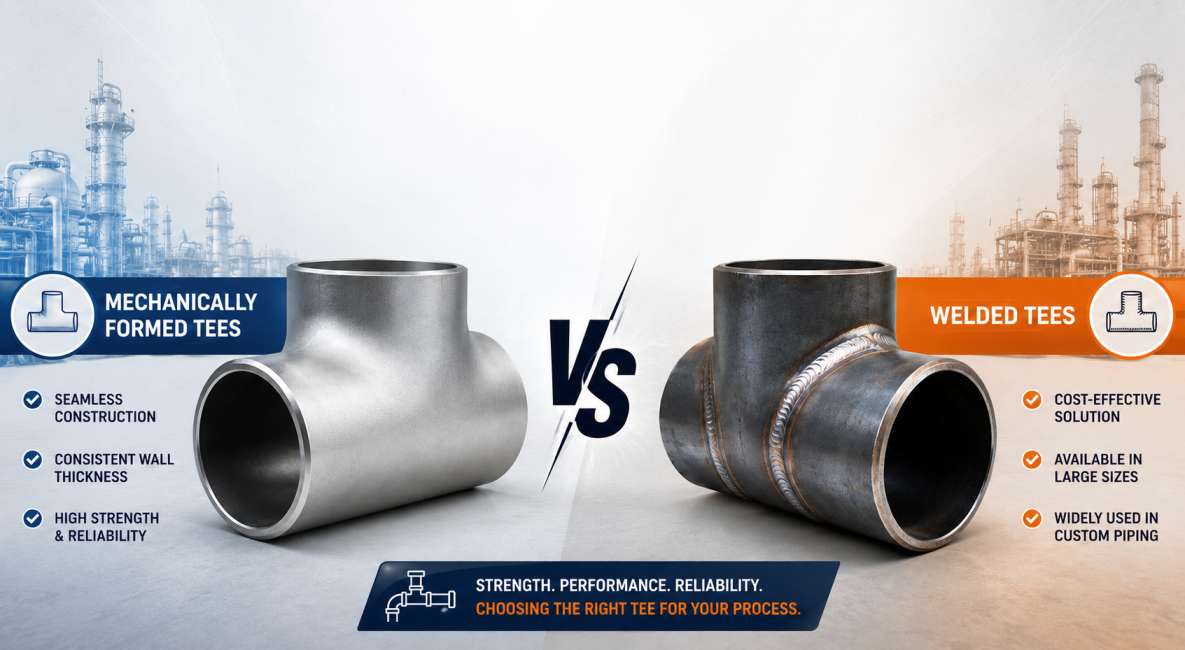
Process piping systems rely on strong and reliable branch connections. Every connection affect flow, pressure, safety, and long-term performance. Therefore, selecting the right pipe tee is an important decision.
Many industries compare mechanically formed pipe tees and welded tees before starting a project. Both are able to establish branches, but they have different installation characteristics, costs, strengths, maintenance, and efficiency.
These differences are important to know for engineers, contractors, and project managers to select the optimal solution for their applications.
A mechanically formed pipe tee creates a branch directly from the main pipe. Instead of attaching a separate fitting, specialized equipment forms the outlet by pulling material from the pipe wall.
Next, the branch receives reinforcement if required by design standards. Finally, the branch pipe connects to the opening. This method reduces the number of fittings while maintaining reliable performance.
A welded tee is a separate fitting that workers weld into the main pipeline. They first cut the pipe. Then they position the fitting before completing the welding process.
This traditional method has served industrial piping systems for decades. Moreover, it remains popular for demanding operating conditions.
Installation affects both project schedules and budgets. Mechanically formed pipe tees require fewer components. Workers create the branch directly on the pipe. As a result, installation becomes faster.
Additionally, fewer welds reduce fabrication time. In contrast, welded tees require extra cutting, alignment, fitting, and welding. Consequently, installation takes longer and needs additional skilled labor. However, experienced fabricators deliver excellent results with either method.
Material requirements vary between the two options. Mechanically formed tees eliminate the need for separate tee fittings. Therefore, projects consume fewer materials.
Furthermore, fewer welding consumables reduce overall expenses. Welded tees require additional fittings and welding materials. Although these costs may seem small, they increase significantly on large projects.
Strength remains one of the most important selection factors. Welded tees are known for their reliability. They work very well at higher temperatures and pressures.
In the meantime, the mechanically formed tees are also very strong if designed properly. However, engineers should always verify pressure ratings and applicable industry standards. Proper design ensures safe and reliable operation for both options.
Efficient flow improves overall system performance. Mechanically formed tees often create smoother branch transitions. Therefore, fluid turbulence decreases.
As a result, pressure loss may also be reduced. Welded tees also provide dependable flow performance. However, internal weld profiles may create slightly greater resistance in certain systems. Even so, both designs perform well when installed properly.
Budget plays a major role in every piping project. Mechanically formed tees generally reduce installation costs.
The savings come from:
Welded tees tend to be more expensive, however, as they are more of a fabrication. However, the additional cost is worth it in many industries for the challenging environments.
Maintenance has an impact on long-term operating costs. Mechanically formed tees contain fewer welded joints. Therefore, there are fewer locations requiring inspection.
Additionally, fewer joints reduce potential leak points. Welded tees contain multiple welds that require periodic inspection. Although quality welding produces durable connections, regular maintenance remains essential. Routine inspections improve safety regardless of the chosen design.
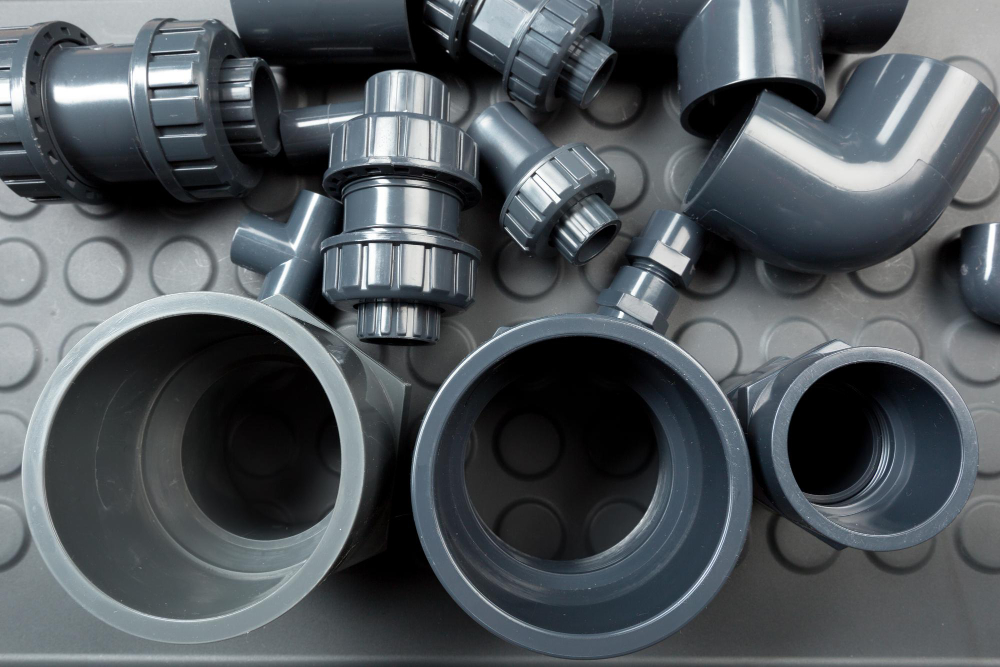
Mechanically formed tees work well in many industries because they reduce installation time and project costs.
Common applications include:
Welded tees remain the preferred choice for critical industrial systems.
Typical applications include:
Every project has unique requirements.
Before making your decision, evaluate:
Considering these factors helps achieve better long-term performance.
Neither option fits every project. Mechanically formed pipe tees provide faster installation, lower costs, and fewer welded joints. Therefore, they are ideal for many modern piping systems.
Welded tees are used for extreme pressures and temperatures, however. Finally, the selection will depend on the engineering needs, safety requirements, and operating conditions. Working with experienced fabrication professionals ensures the right solution for every project.
The goal of UC Design & Fabrication is to provide pipe fabrication products and services that are consistently delivered to our customers’ satisfaction and in compliance with all applicable regulations and industry standards.
Our expert team is available to deliver reliable pipe fabrication solutions that are designed to yield high performance, quality, and durability. From mechanically formed pipe tees to welded tees to complete fabrication services, UC Design & Fabrication can help you with your next project with precision and expertise.
It creates a branch directly from the pipe, reducing fittings, welding, installation time, and overall project costs.
Choose welded tees for high-pressure, high-temperature, and critical industrial piping applications requiring maximum structural strength.
Mechanically formed pipe tees usually reduce labor, materials, installation time, and total fabrication expenses for many projects.
Yes, fewer welded joints reduce inspections, maintenance efforts, leak risks, and long-term operational costs significantly.
Evaluate pressure, temperature, regulations, budget, maintenance, installation needs, and long-term system performance before selecting.